Every type of fire suppression job we carry out, with when you need it, what's involved and how long it takes. Domestic, commercial and industrial.
Server room suppression
Servicing and repair of gaseous systems.
- When you need it
- A server, data or comms room has a gaseous system that is due a service or showing faults.
- What's involved
- Cylinders, pipework, nozzles, detection and the control panel checked, faults repaired and a service report issued.
- How long it takes
- Usually half a day per room.
- Who it's for
- Commercial and industrial server room suppression
Room integrity checks
Making sure rooms hold the agent long enough.
- When you need it
- The room has never been tested, or walls, ceilings, doors or services have been altered.
- What's involved
- Room pressurised with a door fan, leaks found and measured, hold time calculated and leak points reported.
- How long it takes
- Usually two to four hours per room.
- Who it's for
- Commercial and industrial room integrity checks
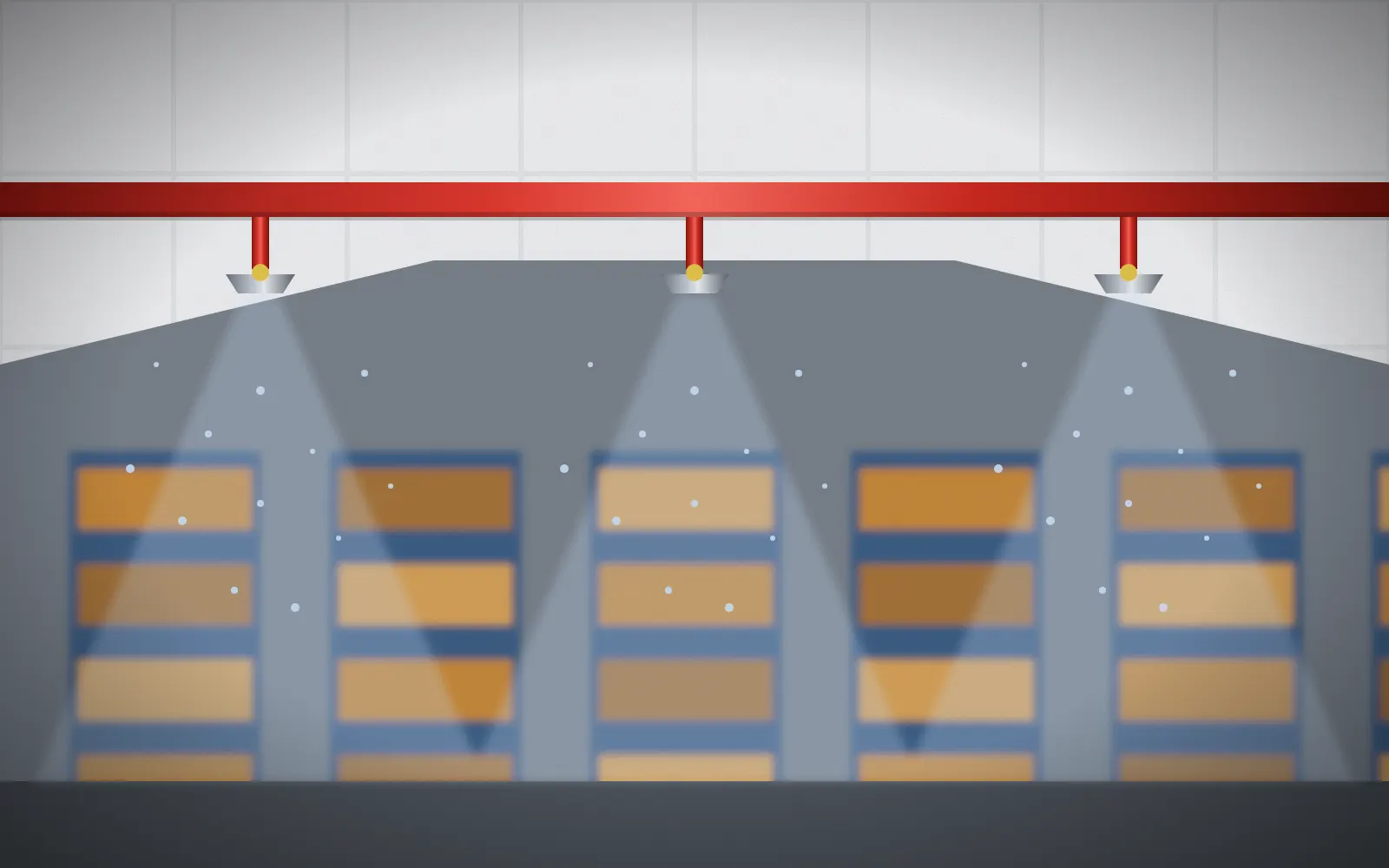
Water-mist systems
Servicing of water-mist suppression.
- When you need it
- A water-mist system protects a room, flat or plant area and is due a service or showing faults.
- What's involved
- Pumps, valves, nozzles, pipework, water supply and controls checked, with faults repaired or reported.
- How long it takes
- Usually half a day.
- Who it's for
- Domestic, commercial and industrial water-mist systems
Detection and release testing
Testing without discharging the system.
- When you need it
- You need to prove the system will detect a fire and trigger correctly without losing the agent.
- What's involved
- Cylinders isolated, detectors and manual releases operated, panel outputs, sounders and shutdowns checked, then reconnected.
- How long it takes
- Usually two to three hours.
- Who it's for
- Commercial and industrial detection and release testing
Cylinder weighing and inspection
Weighing and inspecting gas cylinders to confirm they still hold enough agent and are fit to stay in service.
- When you need it
- Cylinders are due their routine check, or a pressure gauge shows a low reading.
- What's involved
- Cylinders isolated, weighed or level-checked, valves and hoses inspected, and results recorded.
- How long it takes
- Usually an hour or two.
- Who it's for
- Commercial and industrial cylinder weighing and inspection
Gas suppression system installation
New gaseous suppression designed around the room, protecting equipment without water damage or a lengthy clean-up afterwards.
- When you need it
- A server room, archive or plant room holds equipment or records that water would damage.
- What's involved
- Room surveyed and integrity tested, agent quantity calculated, cylinders, pipework, nozzles, detection and controls installed and commissioned.
- How long it takes
- Often two to five days, depending on the room.
- Who it's for
- Commercial and industrial gas suppression system installation
Suppression fault repairs
Clearing panel faults, low pressure warnings and detection faults so your suppression system stays armed and ready.
- When you need it
- The suppression panel shows a fault, low pressure warning or disablement.
- What's involved
- Fault traced through the panel, detection, actuators and wiring, repaired and the system returned to automatic.
- How long it takes
- Usually a few hours.
- Who it's for
- Commercial and industrial suppression fault repairs
Cylinder refills after discharge
Refilling or replacing cylinders after a discharge so the protected room has cover again as soon as possible.
- When you need it
- The system has discharged, whether in a fire or by accident.
- What's involved
- Cause checked, empty cylinders removed for refill or replacement, actuators reset and the system recommissioned.
- How long it takes
- Often a few days, depending on refill lead times.
- Who it's for
- Commercial and industrial cylinder refills after discharge
Shutdown and interface repairs
Fixing links to ventilation, dampers and power so the room seals and equipment shuts down when the system releases.
- When you need it
- Ventilation, dampers or other plant do not shut down when the system activates.
- What's involved
- Interface relays and wiring traced and repaired, then each shutdown proven during a release test.
- How long it takes
- Usually two to four hours.
- Who it's for
- Commercial and industrial shutdown and interface repairs
Manual release and abort units
Replacing damaged or missing manual release, hold-off and abort units at room doors so staff stay in control.
- When you need it
- Release or abort units are damaged, missing or not working during tests.
- What's involved
- Faulty unit removed, replacement fitted and wired, and operation checked at the panel with cylinders isolated.
- How long it takes
- Usually an hour or two.
- Who it's for
- Commercial and industrial manual release and abort units